According to Plan: Why Account Titling and Beneficiary Designations Matter
Posted
on Tuesday, August 4, 2026
in
FInancial Management & Trust Services
It is always nice when things go according to plan. Whether a deviation is minor or significant, achieving the intended outcome depends on all elements working together seamlessly. This is especially true in estate planning, where even small misalignments can have meaningful consequences. Ensuring that all components of your plan are properly coordinated is critical to achieving your overall objectives.
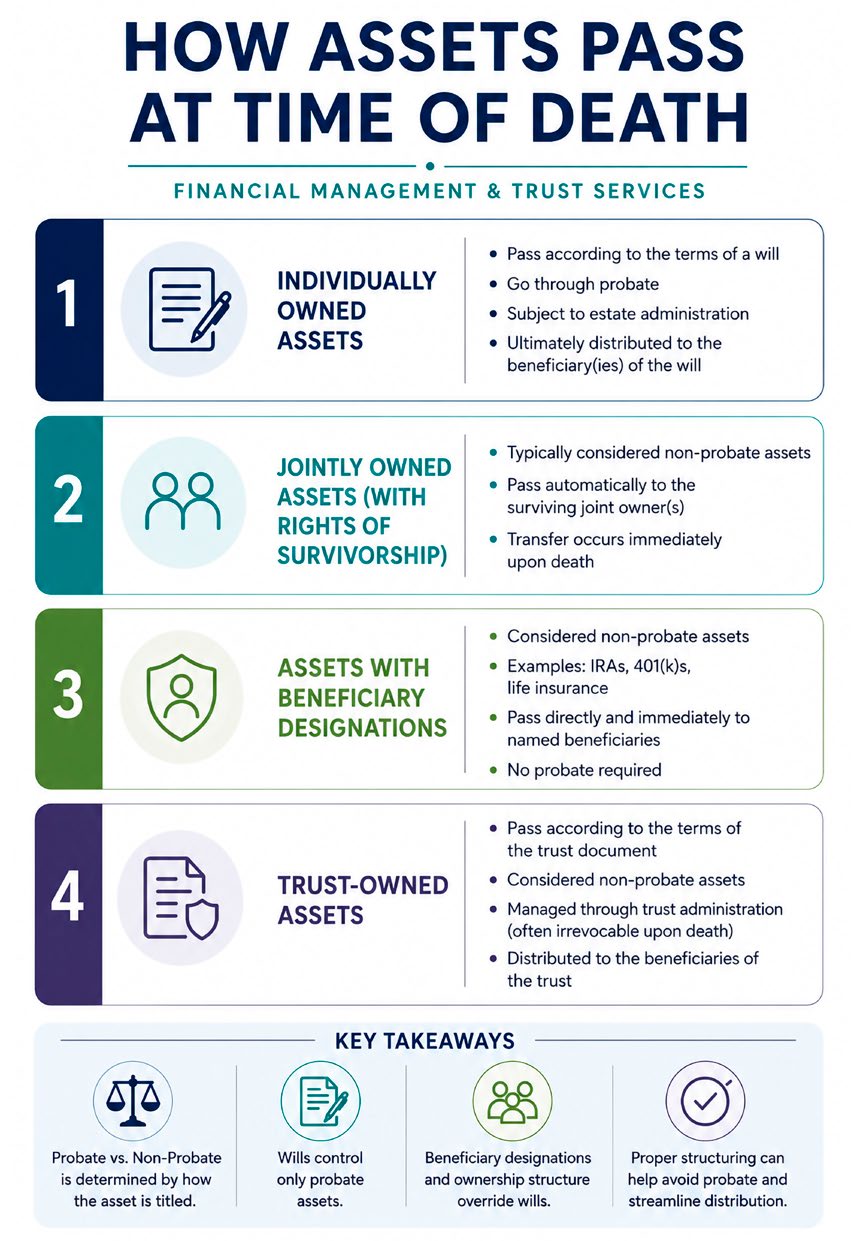
When it comes to transferring assets to your beneficiaries, there are three primary pathways: through your estate, trust, or beneficiary designation.
Assets owned individually in your name generally pass through your estate and are governed by your Last Will and Testament (assuming one has been executed). These assets are typically subject to the probate process before being distributed to beneficiaries.
Alternatively, assets titled in the name of a trust are distributed according to the terms of the trust document. These assets bypass probate, which can:
- Streamline the transfer process
- Provide additional privacy
While establishing legal documents such as a will or trust is an important step, effective estate planning does not end there. A third method of transferring assets is through beneficiary designations. Certain accounts include these as a standard feature, such as:
- 401(k)s and IRAs
- Life insurance policies
- Annuities
In addition, many individual accounts can be structured with beneficiary designations, including:
- Payable-on-death (POD) for bank accounts
- Transfer-on-death (TOD) for investment accounts
Assets transferred via beneficiary designations pass directly to the named beneficiaries—outside of both the will and trust—and typically avoid probate. While beneficiary designations can be a valuable tool, they must be used thoughtfully. For accounts where these designations are optional, it is important to ensure they align with your broader estate plan rather than unintentionally conflict with it.
A well-coordinated estate plan brings together your will, trust, account titling, and beneficiary designations into a cohesive strategy. Regular reviews are essential, particularly when opening or closing accounts, or following significant life events affecting you or your beneficiaries.